Tuesday, 9 September 2014

TOP NEWS Iraq's Shi'ite militia, Kurds use U.S. air strikes to further own agendas

SULEIMAN BEG Iraq (Reuters) - A small group of people pick through putrefying human remains laid out on plastic sheets by the side of a road in northern Iraq, searching for any trace of missing friends and relatives.

Some had brought spades to help dig up the mass grave near Suleiman Beg after the town was retaken from Sunni Islamic State militants who held the area until last week.

"They (Islamic State) slaughtered him simply because he was Shi'ite," said Jomaa Jabratollah, hauling the remnants of his friend, a truck driver, into a coffin, having identified him from the lighter in his breast pocket. "We must take revenge".

Helped by the United States and Iran, Kurdish forces and Shi'ite militia are finally beating back Islamic State militants who overran most Sunni Arab areas in northern and central Iraq nearly three months ago.

But the aftermath illustrates the unintended consequences of the U.S. air campaign against Islamic State.

Kurdish and Shi'ite fighters have regained ground, but Sunni Muslims who fled the violence are being prevented from returning home and some have had their houses pillaged and torched.

Rather than help keep the nation together, the air strikes risk being used by different factions for their own advantage in Iraq's sectarian and ethnic conflicts.

The fallout also risks worsening grievances that helped Islamic State find support amongst Iraq's Sunnis, and allows the militant group to portray the U.S. strikes as targeting their minority sect. That may make it more difficult to bring Sunnis on side and convince them to fight the militants.

"NO WAY BACK"

The unlikely coalition of Kurdish peshmerga fighters, Shi'ite militias and the U.S. air force won a major victory when it broke a siege of the Shi'ite Turkman town of Amerli last week and drove Islamic State from 25 nearby Sunni towns and villages.

But the aftermath is far from what the Americans envisioned. Smoke now rises from those Sunni villages, where some houses have been torched by Shi'ite militia. Others are abandoned, the walls daubed with sectarian slogans.

"There is no way back for them: we will raze their homes to the ground," said Abu Abdullah, a commander of the Shi'ite Kataib Hizbollah militia in Amerli.

The area is now held by Kurdish peshmerga and Shi'ite militia, who have become the most powerful forces on the ground, rather than the Iraqi army, whose northern divisions collapsed this summer when Islamic State attacked.

By the time IS was expelled from around Amerli, many Sunni civilians had fled, fearing for their lives. They have few places to go and are too frightened to return.

"If a regular army were holding the area we could return, but as long as the militias are there we cannot," said a 30-year-old displaced Sunni resident of one village near Amerli, who asked to remain unnamed. "They would slaughter us on the spot."

He admitted some villagers had supported IS, but said it was only one or two for every 70 to 80 households, and that the rest were innocent civilians who were too scared to stand against the militants or had nowhere else to go.

Sunni Turkman al-Muradli and his family left Suleiman Beg the day after it fell to Islamic State in June and moved to a Kurdish-controlled town nearby. A month later, their 21-year-old son was abducted.

The next time they saw him was in a video on the internet captioned "arrest of an Islamic State member", which appears to show their son being beheaded by Shi'ite militia fighters.

His weeping mother insisted he was an innocent student and said her son's killers had phoned her demanding $2,000 to return the corpse without a head, which the caller claimed to have taken to Baghdad as a trophy.

"We cannot return. Even if the Shi'ite army and militia withdraw, Islamic State will come back and the same will happen all over again," said the mother.

The mayor of Tuz Khurmato confirmed the account and said at least four other Sunnis had been abducted in the area in recent weeks, presumably by Shi'ite militia. At least one other video has circulated online of Shi'ite militiamen brandishing the heads of alleged Islamic State fighters.

Pictures online, also allegedly from Amerli, show two militia fighters posing with a pair of charred corpses.

A 42-year-old Shi'ite volunteer said it would eventually be safe for Sunnis to return and that no more than ten houses of known Islamic State members had been deliberately destroyed.

"The Sunnis will come back to their villages but not now: after a few months," he said.

"Since there is no confidence between Sunni and Shi'ite any more, they need guarantees from a third party, maybe the Kurds, then we can live peacefully together again, as we were."

ETHNIC TENSIONS

Sunni Arabs are also feeling a backlash in villages where they used to live alongside Kurds, who accuse them of collaborating with Islamic State.

Kurds, who are also mostly Sunni but identify first and foremost with their ethnicity, have taken back at least 127 villages since the start of the U.S. air campaign, some of which were home to Arabs too.

In one such village, returning Kurds have sprayed over the word "apostate" on the walls of houses and written "Kurdish home" instead. Arab households remain empty.

Kurds in the Makhmour area, from which IS was pushed out in August, say they no longer trust Arabs enough to live with them.

"All my neighbors were Arabs. Now most of them are with Islamic State," said Abdul Rahman Ahmed Abdullah, a member of the Kurdish security services from the village of Baqirta, south of Arbil. "We cannot be mixed together. The only solution is for them to leave."

SOLIDARITY SHORT-LIVED

During the operation to reach Amerli, Kurds gave passage to Shi'ite militia through territory they control and allowed them to use their bases, where they fired artillery at IS positions side by side in an unusual show of solidarity.

"Amerli united Iraqis," said Taleb Jaafar Mohammed, a Shi'ite Turkman teacher, holding a pistol in one hand and a string of prayer beads in the other.

But even during the operation, there were cracks in the coalition: Shi'ite militia and Kurdish forces fought under their own banners and the least visible flag was that of Iraq.

Now that the common enemy has been pushed back, the alliance is unraveling. Kataib Hizbollah, which controls access to Amerli, is denying Kurds entry to the town and one peshmerga commander described the militia as the "Shi'ite IS".

The tensions reflect a struggle for territory which the Shi'ite-led government in Baghdad claims, but the Kurds want as part of their autonomous region in the north of the country.

"This land is ours: they are an occupying force," said Sirwan, a Kurdish fighter, when asked about the Shi'ite militia presence. "There will be bigger problems than Islamic State in this area."

(Editing by Giles Elgood)


FIND OUT MORE ABOUT 'BEN Latest News'


'Like us on Facebook'

http://www.facebook.com/pages/BEN-Latest-News/443681719077160


'Follow us on Twitter'

www.twitter.com/benlatestnews


For Advertisment and Partnering with us contact CEO on BB PIN: 260158B5

BEN Latest News™

TOP NEWS Ukraine death toll edges up despite ceasefire

KIEV/MARIUPOL Ukraine (Reuters) - Four Ukrainian servicemen have been killed since the start of a ceasefire between government forces and pro-Russian separatists last Friday in eastern Ukraine, a defense ministry official was quoted on Tuesday as saying.

The ceasefire is part of a peace plan intended to end a five-month-old conflict the United Nations says has killed more than 3,000 people. It has also caused the sharpest confrontation between Russia and the West since the Cold War.

The ceasefire largely held overnight into Tuesday despite sporadic violations, including in rebel-held Donetsk, the region's largest city, where government forces hold the airport. A woman was wounded in Donetsk overnight, officials said.

The head of the defense ministry's military-medical department in Kiev, Vitaly Andronaty, said four servicemen had been killed and 29 injured since Friday evening, Interfax news agency reported.

It was the first official confirmation of military deaths since the ceasefire began.

In a separate statement, the press center of the Ukrainian military's "Anti-Terrorist Operation" said the armed forces had suffered no casualties overnight into Tuesday.

At the weekend, one woman was killed and at least four other civilians were wounded when government forces came under heavy shelling near the port of Mariupol on the Sea of Azov.

Both sides say they are observing the ceasefire and blame each other for any violations.

"Russian troops and terrorists are continuing their brazen violations of the conditions of the ceasefire, shooting at the positions of the Ukrainian forces, including with heavy weaponry," defense analyst Dmytro Tymchuk, who has close ties to the Ukrainian military, said in a statement on Tuesday.

HOPING FOR PEACE

The other major flashpoint, Mariupol, was quiet on Tuesday, a day after President Petro Poroshenko paid a brief visit to show solidarity with the strategic port that the pro-Russian rebels appeared intent on capturing before the ceasefire.

Poroshenko told cheering residents on Monday he had ordered reinforcements to the city and promised to deal a "crushing defeat" on the rebels massed nearby if they tried to advance again in violation of the ceasefire deal.

"After that bombardment (on Saturday night) we have had two quiet days and I am hoping it will stay that way. This war is taking its toll on everyone and I am hoping this will end soon," Evgeny, a 22-year-old student, told Reuters on Tuesday.

Not everybody was impressed by Poroshenko's visit to Mariupol, which is important for Ukraine's steel exports but lies in the largely Russian-speaking region of Donetsk where many people blame Kiev, not the rebels, for the conflict.

"Poroshenko came yesterday to scare people, to talk about cannons and rockets. To me Ukraine is ready to break the ceasefire and keep on shooting its own citizens, Kiev will be responsible if this town is destroyed," said pensioner Leonid.

Rebel leader Andrei Purgin told Interfax the rebels expected an exchange of 36 prisoners of war between the two sides on Tuesday. The exchange of POWs is one of the conditions of the peace plan agreed last Friday by envoys in Minsk.

The Organization for Security and Cooperation in Europe (OSCE), which is monitoring the ceasefire, has urged the two sides to begin serious talks on a political settlement for eastern Ukraine but they remain far apart.

Purgin said the rebels continued to insist on independence for their self-proclaimed "people's republics" of Donetsk and Luhansk. Kiev says they must stay within Ukraine.

Kiev and its Western backers accuse Russia of sending troops and arms across the border in support of the rebels. Moscow denies the charges.

(Writing by Gareth Jones; Editing by Dominic Evans)


FIND OUT MORE ABOUT 'BEN Latest News'


'Like us on Facebook'

http://www.facebook.com/pages/BEN-Latest-News/443681719077160


'Follow us on Twitter'

www.twitter.com/benlatestnews


For Advertisment and Partnering with us contact CEO on BB PIN: 260158B5

BEN Latest News™

TOP NEWS Dreams on hold, Brazil's 'new middle class' turns on Rousseff

SAO PAULO (Reuters) - The streets of Jardim São Luis, a poor and violent neighborhood near the edge of São Paulo, have not been this quiet in years. And that is exactly why Valeria Rocha is so worried.

Arms folded, she scans the racks of baby clothes in her small store before flicking a glance towards the empty sidewalk.

"Just a year ago this area used to be packed with shoppers but nowadays it's all empty, my store included," she said.

After a decade of economic growth and welfare policies that lifted more than 30 million Brazilians out of poverty, Jardim São Luis and other tough neighborhoods across Brazil had high hopes for the future.

But a faltering economy and mounting frustration over poor public services are dimming the outlook for Brazil's "new middle class."

As that happens, leftist President Dilma Rousseff is watching a once-loyal base - and her chances of re-election next month - slip away. Her main rival, environmentalist Marina Silva, has surged in the polls and is favored to win a likely second-round runoff against Rousseff.

Last month, 13 of 14 people interviewed in Jardim São Luis said they were sure they would not vote for Rousseff, but could not point to a clear alternative. Just a week later, after the first televised debate between the candidates, 8 of 10 people interviewed said they had already decided to vote for Silva or would strongly consider it. The other two were still unsure.

Silva, who grew up poor on a rubber plantation, has emerged as the anti-establishment candidate in this campaign. Within three weeks of entering the race late following the death of her party's original candidate, she is in striking distance of becoming the first Afro-Brazilian woman to lead Brazil.

"Marina is humble, like us," said 60 year-old fruit vendor Ana Luiza de Souza in Jardim São Luis. "Dilma did what she could, now it's time for something new."

HIGH EXPECTATIONS

Brazil's emerging middle class is a defining legacy of Luiz Inacio Lula da Silva's 2003-2010 presidency, a period of rapid economic growth that slashed poverty rates and fueled a massive surge in consumer spending.

It is the lowest-earning yet most populous segment of Brazil's broadly-defined middle class, which ranges from the very comfortable to those who in developed countries would be described as the working poor.

Defined as those with a monthly household income of three to five minimum wages - about $960 to $1,600 - it includes millions who are hovering just above the poverty line but whose spending habits have been transformed.

About 108 million people, or nearly 54 percent of the population, are in the increasingly influential demographic, a key target group in the tight presidential race.

Many live in neighborhoods like Jardim São Luis. Here, higher wages and newfound access to credit during last decade's economic boom opened the door to once-unattainable goods and services.

In time, new cars trundled up the neighborhood's hilly side streets, where bare brick houses were remodeled and filled with new furniture and televisions. For the first time, many residents bought smartphones and brand-name clothes.

By the time 2010's presidential election came around, economic growth was running at 7.5 percent, the future looked promising, and most of the neighborhood voted for Rousseff, largely because she was Lula's hand-picked successor.

But four years later, the economy is stagnant, inflation is stubbornly high at 6.5 percent and much of the middle class is fuming. That anger boiled over in June of last year, when more than a million Brazilians took to the streets in anti-government protests.

"Lula changed Brazil a hell of a lot and everyone thought things would follow on the same path with Dilma. They didn't. This year not many people around here are going to give her another chance," said Ricardo Matavelli, a furniture assembler in Jardim São Luis.

Even Lula now faces criticism from some voters who fear the economic improvements of the last decade could simply disappear.

"I trusted Lula and Dilma when they said things would keep getting better. Not anymore. Everything is just getting worse," said Rocha, who as a child rarely saw her mother because she had to work long hours to support the family. Today she too works seven days a week tending to her business.

OVERPROMISED FUTURE

The euphoria over owning a new car only lasts so long.

Many Brazilians, including Rocha, face a heavy debt burden with higher interest rates. After buying an apartment and a car, she has been unable to pay off her credit card bill, store debt and personal loans, and is now on a credit watch list.

While unemployment remains near historic lows, the specter of job losses looms as businesses including retailers and carmakers begin to cut back.

"It was as if these people were overpromised a future that didn't arrive," said Renato Meirelles, head of research firm Data Popular, which surveys Brazil's middle and lower classes.

"When it became clear that the growth we saw in 2010 was actually the peak and not just the beginning, people began to worry that their hopes for the future would not be realized."

For Rocha, those hopes included renovating her home. Others in the neighborhood planned to open a small business or enroll their children in modest private schools.

To be sure, many Brazilians are sticking with Rousseff. Her Workers' Party maintains strong loyalty among poorer and rural Brazilians, who are the main beneficiaries of government welfare programs, housing subsidies and educational grants.

"The poor are still a very, very big group, and even if she loses some ground there, it will provide her with a means of support," said Carlos Melo, a political scientist with business school Insper in São Paulo.

Silva's rise in opinion polls could also slow or even reverse as she comes under attack from rival candidates and lays out her policies in greater detail.

But Rousseff, who just over a month ago seemed a safe bet for re-election, is undoubtedly in a tough fight.

According to a new poll by research firm Datafolha, 35 percent of people with a household income of between two and five minimum wages - near the bottom of the new middle class - would not vote for Rousseff under any circumstances, up from 27 percent late last year. The number rises to 44 percent for those who earn five to ten minimum wages.

Similar trends have unfolded in other developing countries such as India, where anger among the emerging middle class over slowing economic growth helped launch Narendra Modi, a former tea peddler, into power earlier this year.

STADIUMS OR SCHOOLS

Economic stagnation has not affected everyone in Jardim São Luis equally but frustration runs deep over the quality of public services such as schools, daycare centers and healthcare.

And two months after the World Cup soccer tournament, resentment is still simmering over the billions of dollars the Rousseff government spent to host the event.

As Jose Ides, an out-of-work salesman and lifelong Jardim São Luis resident, put it, "When the people ask for another hospital or a school they can't find the money. But when someone wants to build a stadium, there it is."

While the amount spent on stadiums pales in comparison to Brazil's social spending, the World Cup highlighted the weakness of public services and for many is a symbol of skewed priorities.

"You have a population of poor people and here we are putting on a show," Ides said. "That's where Dilma lost my vote."

(Editing by Todd Benson and Kieran Murray)


FIND OUT MORE ABOUT 'BEN Latest News'


'Like us on Facebook'

http://www.facebook.com/pages/BEN-Latest-News/443681719077160


'Follow us on Twitter'

www.twitter.com/benlatestnews


For Advertisment and Partnering with us contact CEO on BB PIN: 260158B5

BEN Latest News™
TOP NEWS Hundreds die as heaviest rain in 50 years catch India, Pakistan off guard

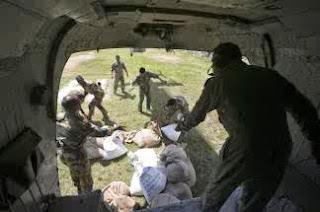
MUZAFFARABAD/SRINAGAR (Reuters) - The heaviest rains to fall on Kashmir in 50 years caught Indian and Pakistani authorities off guard, with criticism of their disaster preparedness growing on Tuesday as the number of dead hit 420 and thousands remained trapped on rooftops.

On the Indian side of the heavily militarized de facto border that divides the Himalayan region, more than 2,000 villages and the city of Srinagar were submerged.

"The damage is shocking, people have been stranded on rooftops of their homes for the last three days in some parts of Kashmir," a senior official of National Disaster Response Force said in New Delhi.

The official, who requested anonymity, said he would have deployed disaster response teams in Kashmir before the floods if his office had been given accurate weather predictions.

"We were all caught off guard because there was not a single warning issued by the weather office. The flash floods took us by surprise," he said.

India's metrological department forecast heavy rains in Kashmir last week, but the Central Water Commission, which issues flood advisories, has been criticized by Indian media for not warning the state.

A massive rescue operation led by the military was under way in both countries

Some 22,000 people have been evacuated from their homes in India, where 217 have so far been reported dead.

The flooding is the first major humanitarian emergency under new Indian Prime Minister Narendra Modi, who called it a "national disaster". It comes at a difficult time for Pakistani Prime Minister Nawaz Sharif, who has faced weeks of street protests aimed at forcing his resignation.

Soldiers rescued families using boats and airlifting them from rooftops by helicopter after the river Jhelum breached embankments in Srinagar, but many more remained stranded.

India has hundreds of thousands of soldiers stationed in Kashmir, manning the border and conducting counter-insurgency operations against separatist militants in a decades-old conflict that claimed thousands of lives at its peak but has cooled off in recent years.

"Fortunately it is not raining in Kashmir today and we are now getting a chance to send our teams across the region to help tens of thousands of people who have been displaced," Indian defense ministry spokesman Sitanshu Kar said.

In Pakistan, 203 people were reported killed by the flash floods in Kashmir and other northern areas of the country.

Saeed Qureshi, an official at the State Disaster Management Authority (SDMA), said the volume of rainfall had rendered contingency plans useless.

"Nobody can fight with nature," said Qureshi. "We had made a contingency plan, identifying vulnerable populations along the banks of rivers and torrents, but rains with unexpected density wreaked havoc on the hilly areas beyond our imaginations."

Qureshi said so far 64 deaths had been reported, 29 of them from the Haveli district that straddles the Line of Control (LoC) separating disputed Kashmir between India and Pakistan.  

"The amount of rainfall in a day was a staggering 400 millimeters in Haveli which had no parallel in the past 50 years," he said, adding that his organization was badly in need of more resources.

The International Federation of Red Cross and Red Crescent Societies said this year's monsoon rains have killed more than 1,000 people in India alone.

When flash floods two years ago in the Himalayan Indian state of Uttarakhand killed 5,000 people, including many Hindu pilgrims, disaster relief authorities were again criticized for their slow response.

(Additonal reporting by Rupam Jain Nair in NEW DELHI; Editing by Frank Jack Daniel)


FIND OUT MORE ABOUT 'BEN Latest News'


'Like us on Facebook'

http://www.facebook.com/pages/BEN-Latest-News/443681719077160


'Follow us on Twitter'

www.twitter.com/benlatestnews


For Advertisment and Partnering with us contact CEO on BB PIN: 260158B5

BEN Latest News™

TOP NEWS Poll shows Scottish independence vote too close to call as London offers more powers

EDINBURGH (Reuters) - The rival campaigns in Scotland's fight over independence are running neck-and-neck nine days before the referendum, with a surge in support for those who wish to break away from the United Kingdom, a TNS poll showed on Tuesday.

The number of people saying they would vote "No" to independence had dropped to 39 percent, down from 45 percent a month ago. "Yes" support was slightly behind at 38 percent but had gained ground from 32 percent a month ago.

"This poll reveals a remarkable shift in voting intentions," said Tom Costley, head of TNS Scotland.

"It is too close to call and both sides will now be energized to make the most of the last few days of the campaign and try and persuade the undecided voters of the merits of their respective campaigns."

The poll follows one in a Sunday newspaper that put the pro-independence camp slightly ahead for the first time this year and led to a fall in the pound and British share prices.The late rally by the "Yes" campaign led by Alex Salmond's Scottish National Party, the ruling party in Scotland, now makes the break–up of the United Kingdom - previously thought to be a pipedream - a distinct possibility after a 300-year-old union.

In an attempt to turn a trend that could herald the end of the United Kingdom, Britain's most prominent politicians scrambled to offer Scots more powers.

Former British Prime Minister Gordon Brown, a Scottish-born Labour politician who has been vilified by the ruling Conservatives for presiding over the 2008 economic crisis, offered a timetable for the devolution of further powers to the Scottish Parliament.

Prime Minister David Cameron's job could be on the line if Scotland voted for independence in the Sept. 18 referendum.

But the Conservative leader has been largely absent from the debate after conceding that his privileged background and center-right politics mean he is not the best person to win over Scots, usually more left-wing than the English.

That has left the opposition Labour party with much of the burden of trying to convince Scots not to break the union.

DISUNITED KINGDOM?

Speaking for the unionist campaign in a miners' welfare club in central Midlothian on Monday evening, Brown said discussions over further powers would begin the day after a "No" vote, with legislation put before the U.K. parliament by January 2015.

It would strengthen the Scottish Parliament, giving it more power over welfare, finance, social and economic policy, he said.

"This moves us as close to federalism as we can," said Brown, one of the only British politicians that nationalist leader Salmond is said to fear.

"Scotland is already a nation. We are proud of our history and culture. Do we want to sever all constitutional links with our friends, our neighbors, our relatives in England, Wales and Northern Ireland?"

The intervention by Brown, who remains popular in Scotland, was welcomed by Britain's three main political parties and a Downing Street source.

Polls which show the unionist lead evaporated in late August as traditionally unionist Labour party supporters switched to support independence have sown concern bordering on panic within the British ruling elite.

Opposition Labour leader Ed Miliband even called on people across the United Kingdom to fly the white-on-blue Scottish Saltire flag to send a gesture of unity to Scots.

"We want cities, towns and villages across the UK to fly the Saltire and send a message to Scotland: stay with us," Miliband said in a statement.

'TOO CLOSE TOO CALL'

The TNS poll of 990 people, carried out between Aug. 27 and Sept. 4, found a surge in the number who said they were certain to vote to 84 percent. Among those certain to vote, "No" and "Yes" were tied on 41 percent compared with 46 percent and 38 percent respectively in the previous month.

Women - previously seen as cautious about independence - showed a strong move towards a "Yes" vote. There was also an increased likelihood to vote "Yes" amongst those aged under 55.

The TNS poll showed 41 percent of women surveyed intended to vote "No" compared to 35 percent for "Yes". However, the "No" figure was a drop from 49 percent a month ago, while the "Yes" vote among women had risen from 27 percent, the poll said.

The proportion of undecided voters had risen from 16 percent to 18 percent - a figure that implied about 600,000 people intended to vote but had not decided which way to go.

The independence question has provoked months of impassioned debate in Scotland from business boardrooms to grassroots street campaigns.

Proponents of independence say it is time for Scotland to run its own affairs and choose its own leaders rather than be ruled from London. An independent Scotland can use its North Sea oil revenue to create a prosperous and fairer society, they say.

Advocates of staying in the union say the country is stronger as part of a bigger entity. Going it alone would put it in a precarious economic position, with questions over what currency it would use, its continuing membership of the European Union and NATO, and how much oil is actually left in the North Sea to fill the national coffers, they say.

(Writing by Angus MacSwan and Guy Faulconbridge; Editing by Janet Lawrence and Peter Graff)

FIND OUT MORE ABOUT 'BEN Latest News'


'Like us on Facebook'

http://www.facebook.com/pages/BEN-Latest-News/443681719077160


'Follow us on Twitter'

www.twitter.com/benlatestnews


For Advertisment and Partnering with us contact CEO on BB PIN: 260158B5

BEN Latest News™

HEALTHCARE NEWS: Liberia to see huge Ebola surge – WHO

World Health Organization says thousands of new cases are imminent as efforts to fight outbreak fall woefully short.

The World Health Organization has warned that Liberia is set to see a huge spike in infections from the Ebola epidemic ravaging west Africa, with thousands of new cases imminent.

The UN agency on Monday said the country, worst-hit in the outbreak with almost 1,100 deaths, faced "many thousands" of new infections in the next three weeks.

"WHO and its director-general will continue to advocate for more Ebola treatment beds in Liberia and elsewhere, and will hold the world accountable for responding to this dire emergency with its unprecedented dimensions of human suffering," it said in a statement.

The deadliest Ebola epidemic the world has ever seen is spreading across west Africa, with Liberia, Guinea and Sierra Leone the countries worst affected.

The death toll has topped 2,000, out of nearly 4,000 people infected.

Liberia already accounts for about half of all cases and deaths, and "the number of new cases is increasing exponentially", the WHO warned.

Key development partners trying to help Liberia respond to the outbreak "need to prepare to scale up their current efforts by three- to four-fold," it added.

The countries bearing the brunt of the epidemic are among the world's poorest, with dilapidated medical infrastructures that have all but buckled under the strain of trying to contain the virus.

Before the outbreak, Liberia had only one doctor to treat every 100,000 patients in a total population of 4.4 million people.

Now that 152 healthcare workers in the country have been infected and 79 have died, the WHO said the ratio had worsened significantly.

"Every infection or death of a doctor or nurse depletes response capacity significantly," it said.

No treatment bed

The UN body described how taxis filled with entire families, including members suspected of having Ebola, criss-crossed Monrovia "searching for a treatment bed".

"There are none. As WHO staff in Liberia confirm, no free beds for Ebola treatment exist anywhere in the country."

When Ebola patients are turned away from treatment centres, "they have no choice but to return to their communities and homes, where they inevitably infect others, perpetuating constantly higher flare-ups in the number of cases," it said.

In Montserrado county alone, which includes Monrovia, the agency said 1,000 beds were urgently needed to treat Ebola patients.

In the scramble to halt the contagion, some affected countries have quarantined whole regions, while others so far free of the virus have halted flights.

Nkosazana Dlamini-Zuma, chief of the African Union Commission, called on Monday for travel bans imposed to stem the epidemic to be lifted, "to open up economic activities".

She told a crisis meeting in Addis Ababa there was an urgent need to "craft a united, comprehensive and collective African response" to the outbreak.

But she also warned that in the battle to stop the spread, "we must be careful not to introduce measures that may have more… social and economic impact than the disease itself".

Experts have warned that economic losses caused by the restrictions were adding to the continent's woes, with some arguing that travel bans even slowed medical help getting to affected areas.


FIND OUT MORE ABOUT 'BEN Latest News'


'Like us on Facebook'

http://www.facebook.com/pages/BEN-Latest-News/443681719077160


'Follow us on Twitter'

www.twitter.com/benlatestnews


For Advertisment and Partnering with us contact CEO on BB PIN: 260158B5

BEN Latest News™

TOP NEWS: Motorist crushes LAWMA official to death, injures one

A hit-and-run driver of a jeep knocked down two highway managers of the Lagos State Waste Management Agency on Monday along Iyana Oworo Expressway in the state.

According to PUNCH Metro learnt that although the driver managed to escape, the vehicle's number plate fell in the process and had been handed over to security officials.

It was gathered that the driver, who was on top speed, wanted to beat the traffic snarl when he rammed into the victims, identified as Lateefat Sulyman and Fatimoh Ajetunmobi.

Sulyman (popularly called Iya Tawa) was crushed to death while Ajetunmobi was said to have been rushed to a hospital.

Our correspondent, who arrived at the scene of the incident at about 8.50am – 20 minutes after the crash – saw security officials and other sympathisers around the corpse of Sulyman who was in a pool of blood. The road was also littered with debris said to have been packed by the victims.

While men of the Federal Road Safety Corps and Lagos State Transport Management Agency moved the corpse to a morgue, her co-workers lamented her untimely death.

One of the workers, who declined to give her name, said Iya Tawa, an indigene of Abeokuta in Ogun State, had promised to resign from the job in December and set up a business, adding that she was the one taking care of her parents.

"She was the one who took care of her parents. She told me about her plan to leave this job by December and start her own business with the money her husband gave her. I told her to quit immediately but she said she wanted to wait till they moved to her husband's house. We don't pray for this, God. This is a great loss," she said in tears.

An eyewitness, who identified himself simply as Kunle, described Ajetunmobi's condition as critical.

"My brother, it was a terrible Monday. I work around here. There was blood everywhere. The other woman was discharging substance from her private parts while they were taking her to a hospital."

The LAWMA General Manager, Mr. Ola Oresanya, said the workers were just resuming for work when the accident happened.

He said they were making efforts to track down the driver, adding that Ajetunmobi was responding to treatment.

He said, "It happened just as they resumed for work. It was unfortunate that we lost a worker to the accident. The other woman is responding to treatment in the hospital.

"The number plate has been handed over to the police and we are making efforts to ensure that the driver is arrested."

SOURCE: PUNCH

FIND OUT MORE ABOUT 'BEN Latest News'


'Like us on Facebook'

http://www.facebook.com/pages/BEN-Latest-News/443681719077160


'Follow us on Twitter'

www.twitter.com/benlatestnews


For Advertisment and Partnering with us contact CEO on BB PIN: 260158B5

BEN Latest News™